“My name is Ozymandias, king of kings.
Look upon my works ye Mighty and despair.”
Percy Bysshe Shelley
We know enough to learn from history and sometimes that history happened a very long time ago. Still we can learn lessons even from the ancient past.
Several times I have written about parallels between Steve Bannon and Thomas Cromwell, Donald Trump and King Henry VIII. Recently, however, I began connecting our wannabe king in his golden office with the Egyptian Pharaoh Akhenaten.
Akhenaten and History
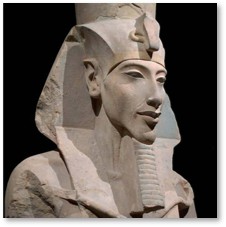
Pharaoh Akhenaten
If you don’t know anything about the Pharaoh Akhenaten, that’s not surprising. You have to have an interest in Ancient Egypt or have traveled there yourself to even hear his name. But Akhenaten was a revolutionary pharaoh who introduced and enforced radical systemic changes. Unfortunately, those changes had no public support and he himself had little popularity.
His case history shows how that situation can provoke extreme backlash. Akhenaten’s drastic changes affected multiple areas of Egyptian culture. See if you can spot the parallels with today’s United States:
A Religious Revolution
Akhenaten abolished Egypt’s traditional polytheistic system and implemented the first monotheistic state in recorded history. He forced the exclusive worship of Aten, the visible disk of the sun. Before this, Aten was an obscure aspect of the Sun God Ra and impersonal compared to Egypt’s beloved deities.
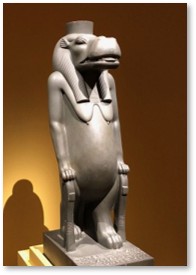
Taweret
He shut down temples to major gods like Amun, Osiris, and Ptah. That was bad enough because they ruled the big, important things like life and death, day and night, and the Nile floods. But small things also mattered. Pregnant women, for example could no longer invoke the goddess Taweret on whom they depended for protection from evil spirits and dangerous forces during pregnancy and delivery.
The result was that the priests in all those big temples lost power, authority, money, and support. The ordinary people also grew angry and frightened as they could no longer depend on the rituals, festivals, and protective gods that structured their daily lives. The priests became Pharaoh’s enemies.
Economic Disruption
The polytheistic temples were not just religious centers; they were also economic hubs. The priests provided jobs, distributed food, and contributed to the social welfare. By closing them, Akhenaten destabilized local economies and cut off vital support networks for commoners, who could no longer depend on assistance.
Cultural Alienation
Ancient Egyptians valued continuity and tradition. Artistic depictions of the Pharaoh and the Royal Family followed rigid patterns that had remained the same for centuries. Akhenaten, however, implemented abrupt artistic and cultural changes.
These included depictions of himself with a distorted face, a pot belly and a grotesque elongated skull. Portrayals of the royal family changed from formal and stylized to informal and affectionate. They looked strange. This rejection of established norms felt unsettling and even blasphemous to everyone, from priests to commoners and subsistence farmers.
Neglect of Foreign Policy
Obsessed as he was with religious reform, Akhenaten neglected Egypt’s enormous empire abroad. Records show he ignored pleas from allies for military aid, weakening Egypt’s safety and international standing. This neglect likely trickled down to ordinary Egyptians, who suffered from reduced wealth and security.
Uprooting the People
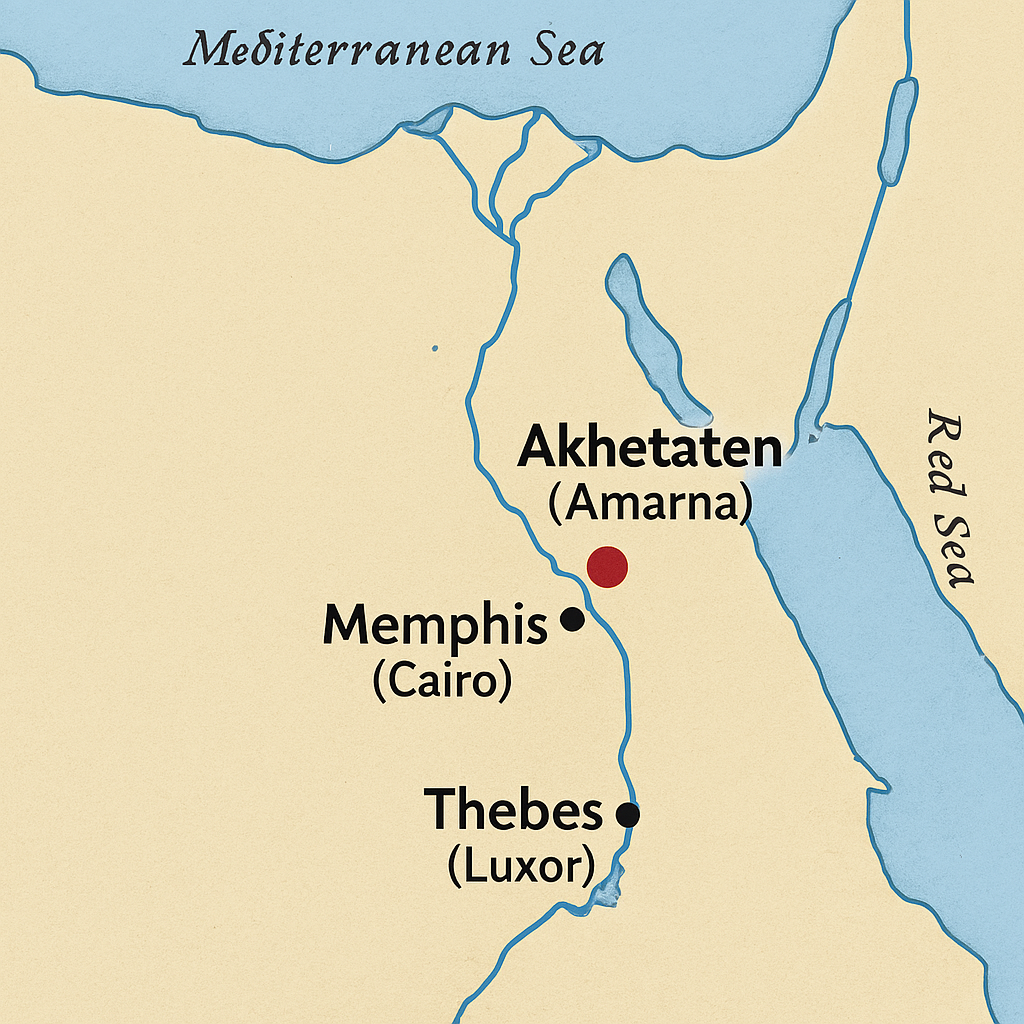 Worst of all, however, he moved the capital from Thebes to Akhetaten (modern Amarna). Thebes was the religious and political heart of the empire, home to the powerful priesthood of Amun and monumental temples like Karnak and Luxor.
The new city, built in its entirety to honor his monotheistic worship of Aten, was located in a strange place roughly midway between Upper and Lower Egypt. That gave it a sense of neutrality and centrality. By moving away from Thebes (the stronghold of Amun’s priesthood), Akhenaten also physically and symbolically distanced himself from the old religious establishment.
The royal decree uprooted thousands, however, forcing them to move far from everything they knew and respected. It also made them abandon their gods, the temples in which they had worshiped, and their homes. The people hated the new city and everything about it.
Did Akhenaten Succeed?
So, what happened? Did Pharaoh Akhenaten succeed with his new policies, his new religion and his new capital?
The answer is no across the board.
Akhenaten’s reforms failed because they lacked public legitimacy and dismantled everyday structures of life. People hated them and considered them not reforms but impositions and upheaval. They suffered under his dictates and yearned to go back to the safe, profitable, familiar lives they had lived before his reign.
After Pharaoh’s Death
After Pharaoh’s death (around 1336 BCE), the Egyptian people wiped out any trace of his reign.
They abandoned Akhetaten, the capital city in the middle of nowhere, almost overnight. Archaeological evidence shows that construction halted abruptly and many structures were left unfinished. The city was never expanded or maintained, suggesting a sudden halt in royal patronage by his successor, Smenkhkare. The city of Akhetaten was not repurposed—it was left to decay, as if to forget the entire experiment.
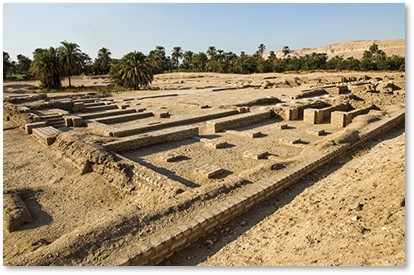
Tel el-Amarna
Many residents, especially artisans and officials, returned to Thebes. The powerful priesthood of Amun quickly reasserted control, re-opening temples and reestablishing festivals. The common people returned to their homes, their gods, and the legal, cultural, and international norms that had governed their lives.
Erasing Akhenaten
And what of the man himself? The people did their best to erase him from history. They defaced his images and crossed out his name in hieroglyphs and cartouches on monuments. This practice is known as damnatio memoriae.
As for the man himself, the treatment of his body in a culture that venerated and protected the mummified remains of their pharaohs says it all. Akhenaten’s tomb in Amarna was never fully used. His remains may have been moved to the Valley of the Kings, though this is uncertain.
And his memory was so thoroughly wiped out that it wasn’t rediscovered until the 19th century.
“Nothing beside remains. Round the decay
Of that colossal wreck, boundless and bare
The lone and level sands stretch far away.”