On LinkedIn, a person asked a question of Liz Ryan, who generated a poll, which generated opinions and comments and it all resounded with me. Liz Ryan is the CEO and Founder of Human Workplace. She frequently answers questions on LinkedIn, creates quizzes, and comments on the results. I love reading her contributions, which are clear and common-sense based on her experience. This one was a whopper.
The Question: is it polite to ask someone you’re meeting for the first time whether they are neurodivergent?
The Quiz:
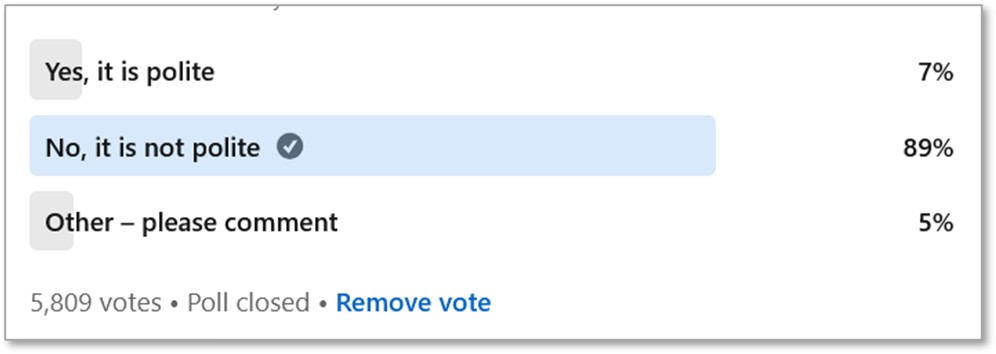 NOTE: The question simply asks about meeting someone for the first time. It does not specify in an interview situation. It was my first thought, however.
Reactions and Comments
Now, you may react with shock and horror to the very concept of this question—as many of the commenters did. Here are a couple:
“Why on earth would you do that? Think again.”
“That’s the equivalent of asking if they are pregnant or stupid! Let them disclose when and how they are comfortable or maybe you’ll never even notice!”
Other people took a calm and professional approach to addressing this as an issue, discussing if it is an issue at all, and insisting on respecting everyone’s privacy. Kudos to them.
Never Asked the Question
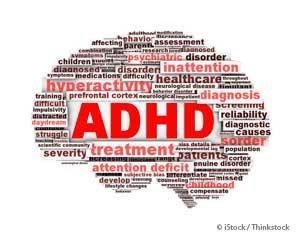 To be clear, I have never asked a question like this upon meeting anyone. There is simply no reason to do so, although I might form my own private opinion based on their behavior or mannerisms. More importantly, neither did I ask it in any of the many, many hiring interviews I conducted during my career as a manager and director. There is simply no way to ask about neurodivergence in an interview without violating the law, personal privacy, HIPAA regulations, and good manners.
Yet, I thought often about ways to deal with candidates who had ADD or ADHD, because that condition is not always apparent in an interview. Someone on the autism spectrum might signal it by not making eye contact, not reading social cues, taking metaphors literally, or insisting that something be done a certain way.
Not Always a Signal
People with ADD or ADHD don’t signal their neurodivergence in the same way. As one commenter said, they might not even know they have it.
That was certainly the case when I had people with attention deficit disorder on my team or, for that matter, when I worked for them. For a long time, I didn’t always recognize the “tells” that signaled I should pay attention to the situation. That awareness changed over time.
Living with ADD Family
I live with a husband who has ADD, as does one of my children. They were not diagnosed until much later in life than was helpful, despite consultations with doctors, therapists, analysts, teachers, counselors and other professionals. As I learned more, I became able to translate what I learned into the work world.
I found managing an employee with ADD or ADHD at any level to be a challenge, even when I knew the signs and recognized the behaviors. Many times, I thought about creating a filter to screen them out of my hiring process but never found one.
Why would I do this? For the simple reason that those behaviors can create problems for a manager, no matter how well-intentioned they might be. No, I am not being judgmental. My opinion comes from experiences like the ones below.
Reporting to Neurodivergence
- I reported to a man who could only act when his adrenaline was flowing and a deadline was looming. This is common with ADD people. Incapable of managing his time to plan ahead or get an early start, he would procrastinate until the last minute, forcing everyone on his team to work in crisis mode until late at night or over a weekend, regardless of our own schedules and deadlines. (Not to mention family obligations.)
 I prepared to make a presentation to a VP who was known for his “impatience.” That often means inability to concentrate for more than a short time.
When I reviewed the presentation with my boss, he said, “It’s too long. Drop half the slides. You only have five minutes; after that he starts reading The Wall Street Journal.” Inability to concentrate may be considered an eccentricity in an executive but could cost an employee his job when he can’t focus on the project.
Neurodivergence On My Staff
- I had a wonderful person on my staff who, like the executive, simply couldn’t concentrate, pay attention to detail, or follow a schedule. This does not work to a manager’s benefit, especially when you have a deadline to meet. Instead, it creates a problem. While I liked the person, I found the problem intrusive and distracting. It created extra work for me and got in the way of doing my job well.
- I inherited a very nice employee who would jump in and interrupt me when I was speaking. This is an ADD behavior designed to prove that they are on top of what’s going on and know what needs to be done. It compensates for feeling inadequate. Unfortunately, they didn’t always know what I was going to say and their interruptions struck me as both rude and annoying. Instead of giving instructions and moving on, I had to regroup and restate. Again and again.
Screening Out the Behaviors
So how do you screen out candidates with behaviors that are going to make your job more frustrating, more difficult, less effective and more annoying? The simple answer is that you can’t. Some of Ms. Ryan’s commenters said that you shouldn’t try because “people in this spectrum with autism, ADHD, or other neurological and neurodivergent characteristics also have strengths that others do not have.”
With all due respect, I never found this to be the case. At least not in the work world. TV treats us to neurodivergent doctors, detectives, and other in shows like House M.D., Monk, Extraordinary Attorney Woo, Ludwig, and Astrid et Raphaëlle.
You might notice that these shows typically position the neurodivergent character in a profession that gives them more flexibility than is often the case in the real world. While entertaining, the shows intentionally focus more on the positive aspects than the negative, although they do exhibit frustration on the part of bosses and co-workers. In the real world, the negative aspects can create more problems for neurotypical managers and colleagues than a script will include.
Supporting Neurodivergent Employees
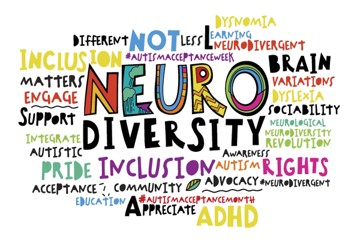 There are ways to support neurodivergent employees because there is now greater recognition of their potential value than there was back then.
But some jobs play more to their strengths than others. I would not, for example, want an employee on the autism spectrum to work in a trade-show hall setting up the corporate exhibit. Nor would they want to be in that kind of noisy, chaotic, fast-moving environment.
So, do I ask the question? I do not. But I still think about how much easier some of those jobs might have been if I’d managed teams with fewer problems and less divergence.