Am I the only one who finds it ridiculous that our 21st-century Congress communicates with old-fashioned visual aids?
Out here in the real world, we use computerized slide presentations, video clips, audio sound bites, AI illustrations, animated sequences and other state-of-the-art visuals in meetings, conferences, Zoom lectures, and other events.
Workers don’t rely on the IT department to put these things together. We learn to use the software ourselves and become expert in communicating our ideas with a variety of technologies. Conference rooms come equipped with computer hookups, drop-down screens, and other devices necessary to ensuring this process is easy and simple.
Posterboard Signs and Waving Aides
But when it comes to the United States Congress, we see aides lifting large posterboard signs and photos before depositing them on tripod easels. For extra emphasis, the aides wave the signs back and forth.
This is 1960s communications left over from a time before computers, before AI, and before the internet.
Why?
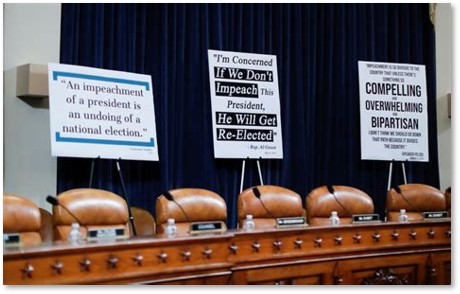 Please don’t tell me it’s because the Congress meets in historic rooms that can’t be altered or improved in any way. They have microphones on the lectern, don’t they? CSPAN broadcasts sessions, doesn’t it? I’m sure those rooms weren’t wired for electricity when they were built in 1793 or rebuilt after the War of 1812, but they managed to install it later on.
Also, they use audio-visual communications in committee hearings.
Expensive and Old Fashioned
And don’t tell me the Congressional budget won’t allow for such a huge expense.
First, installing screens and ways to link computers isn’t expensive. In fact, printing all those signs and photos probably costs more.
Second, why can’t they use the $17 million slush fund the Congressmen keep to defend themselves and pay off victims of their sexual harassment.
 Not only do they have the money, they just ensured they wouldn’t lose it by agreeing on a bi-partisan vote not to make public Congressmen with sexual harassment problems. I think $17 million would buy a lot of screens that drop down from the ceiling at the flick of a switch. For that matter, it would buy a lot of computers. It could be put to better use than protecting Congressmen from their own indiscretions.
Four Types of Learning
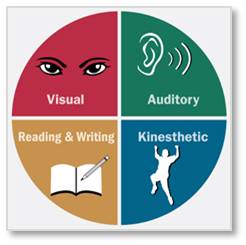 Back in 2016 I wrote about the four VARK learning types and how politicians depend only on one for their communications. The Luddite Congress typifies this. The only type of communication they really know is auditory. They talk; we listen. Physical signs pay lip service to visual support and they do a really bad job of it.
That leaves visual and kinesthetic learners out in the boonies. Plus, it’s like ignoring radio, TV and Internet to communicate only in Morse Code.
Ineffective Communications in Congress
Not only are the physical signs expensive and old-fashioned, they are ineffective. You probably can’t see one from the back benches or the far side of the room. Now imagine how much more effective a big screen like the ones you see at major events would be at the front of the House or Senate chambers. Those major events include the two national conventions, so it’s not like the House members and Senators have never seen one.
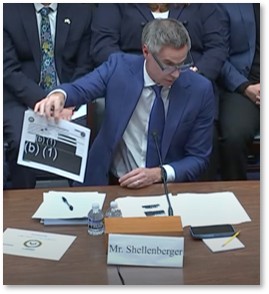
Read this sign
Now, I realize this must seem like small potatoes when we consider the huge issues facing the United States, from a surprise war in the mid-east to Americans gunned down on the streets by presidential secret police. But, really, what better time to update the rooms where our two branches of Congress meet and vote?
If we ever needed clear and impactful communications among our leaders and from them to us, it’s now.